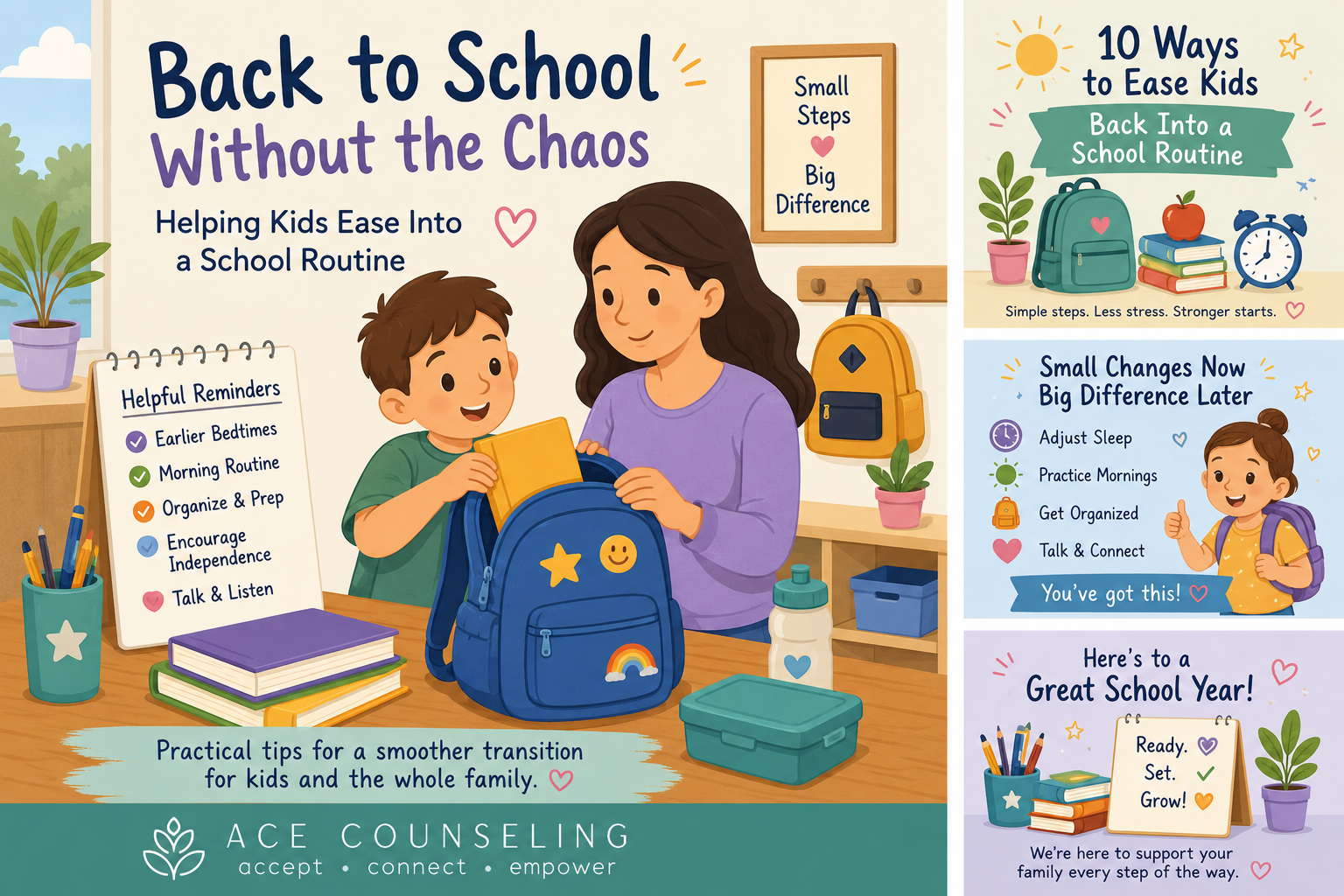
Back to School Without the Chaos: Helping Kids Ease Into a School Routine
Summer has a rhythm all its own.
Bedtimes get a little later. Mornings become less rushed. Meals may happen at different times, vacations interrupt the usual schedule, and kids get used to having more freedom in their days.
Then suddenly, the first day of school is right around the corner.
For many families, trying to switch from summer mode to school mode overnight can lead to tired kids, stressful mornings, arguments over getting dressed, forgotten backpacks, and frustrated parents.
The good news? You don’t have to wait until the first day of school to make the adjustment.
The last couple of weeks of summer are an ideal time to gradually rebuild your family’s school routine. In fact, pediatric and parenting experts commonly recommend beginning sleep and morning-routine adjustments before school starts rather than making a sudden change the night before.
Here are 10 practical ways parents and caregivers can help kids get ready for the school year ahead.
1. Start Moving Bedtime Earlier
One of the biggest differences between summer and the school year is often sleep.
If your child has been staying up late and sleeping in, expecting them to suddenly fall asleep early the night before school probably won’t work very well.
Instead, start adjusting bedtime and wake-up time gradually.
Try moving bedtime and wake-up time about 10–15 minutes earlier every few days until you’re close to the schedule you’ll need for school. Cleveland Clinic recommends beginning at least a week ahead and making larger schedule changes gradually over two or three weeks.
Don’t forget about the morning side of the equation, either. Getting up earlier helps children’s bodies begin adjusting to their new schedule.
Parent tip: Start the morning with something pleasant—a favorite breakfast, music in the kitchen, a walk with the dog, or another small activity your child enjoys. An earlier alarm feels a little less painful when there’s something worth getting up for.
2. Bring Back a Predictable Morning Routine
A few days before school starts, try a practice school morning.
Have everyone wake up around the time they’ll need to during the school year. Get dressed, brush teeth, eat breakfast, put on shoes, and figure out when you’d realistically need to leave the house.
You might discover that breakfast takes longer than expected or that one child needs significantly more time to get moving.
That’s exactly why you’re practicing now.
Predictable routines can reduce morning power struggles and help children become more independent because they know what comes next.
For younger children, consider making a simple visual checklist:
- Wake up
- Get dressed
- Brush teeth and hair
- Eat breakfast
- Put on shoes
- Grab lunch and backpack
- Head out the door
Pictures can replace words for children who aren’t reading independently yet.
3. Don’t Schedule Every Minute of the Last Weeks of Summer
Getting ready for school doesn’t mean summer has to end early.
Keep the pool days, trips to the park, movie nights, sleepovers, and ice cream runs.
Instead of suddenly imposing a strict school schedule, focus on introducing a few anchor points into the day: a more consistent wake-up time, regular meals, an earlier bedtime, and perhaps a little quiet reading or independent activity.
Gradual change is often easier to maintain than an abrupt overhaul.
4. Create a “Launch Pad” for School Mornings
Choose one spot near the door where school essentials live.
Backpacks go there. Shoes go there. Jackets go there. Lunchboxes go there. Sports equipment or instruments needed the next day can go there, too.
The American Academy of Pediatrics’ HealthyChildren.org specifically recommends creating this type of designated school-item “launch pad” to make mornings more organized.
Then introduce one simple evening habit:
Before bed, everything needed tomorrow goes to the launch pad.
It’s a small routine that can eliminate a surprising amount of morning chaos.
5. Let Kids Take Some Ownership
As adults, it’s tempting to do everything ourselves because it’s faster.
But preparing for school is also an opportunity for kids to practice responsibility.
Depending on their age, children can help:
- Pack their backpack.
- Fill their water bottle.
- Choose clothes for the next day.
- Put shoes by the door.
- Pack part of their lunch.
- Check their school supply list.
- Set their alarm.
- Create their own morning checklist.
Children may need reminders and practice before they can consistently manage these tasks independently—and that’s normal. Organization is a skill that develops with repetition.
The goal isn’t perfection. It’s helping kids gradually learn, “I know what I need to do to get myself ready.”
6. Talk About School—Without Making Every Conversation About School
As the first day gets closer, casually check in.
Try questions such as:
“What are you most looking forward to this year?”
“Is there anything you’re wondering about?”
“What do you think will be different this year?”
“What would make the first morning easier?”
Some children will be excited. Others might be nervous. Many will be both.
You don’t necessarily need to convince a worried child that everything will be great. Instead, acknowledge that mixed feelings are allowed. A child can be excited to see friends and nervous about a new teacher at the same time.
Sometimes simply knowing that an adult is willing to listen is more helpful than immediately trying to solve the concern.
7. Practice the Little Things
Adults often focus on the big transition—going back to school—while kids may be worried about much smaller details.
Can I open my lunch container?
Where do I put my backpack?
What if I can’t tie my shoes quickly?
What happens at drop-off?
Where will I go after school?
If your child is younger or entering a new school, practice what you can.
Have them open their lunchbox independently. Practice zipping the backpack. Walk or drive the route to school. Visit the playground if it’s accessible. Talk through where pickup will happen.
Practicing everyday school tasks ahead of time can help children feel more capable when school begins.
8. Reintroduce Some “Brain Work”—But Keep It Light
You don’t need to recreate school at the kitchen table.
Instead, casually work learning back into everyday life.
Read together before bed. Visit the library. Cook something and have your child measure ingredients. Play card or board games. Write a shopping list. Let older kids choose a book, magazine, graphic novel, or topic they genuinely enjoy.
The goal during these final summer weeks isn’t to cram in academics.
It’s simply to help kids get comfortable again with reading, concentrating, following directions, solving problems, and completing a task before moving on to something else.
9. Prepare the Night Before
If mornings tend to be stressful in your house, move as many decisions as possible to the evening.
Choose clothes.
Pack backpacks.
Check calendars.
Prepare lunches or snacks.
Put permission slips where they need to go.
Charge school devices.
Make sure shoes aren’t mysteriously missing.
A five-minute evening check can prevent a 20-minute morning search for the library book that was “definitely right there yesterday.”
10. Give Everyone Some Grace
Even with excellent preparation, the first few weeks of school can be tiring.
Kids are adjusting to earlier mornings, longer periods of concentration, new teachers, different classmates, extracurricular activities, homework, and a lot more structure than they may have had during summer.
Parents and caregivers are adjusting, too.
Your routine doesn’t have to work perfectly on Day One.
Pay attention to what’s working and what’s creating unnecessary stress. Then adjust.
Maybe clothes need to be selected the night before. Maybe breakfast needs to be simpler. Maybe your child needs ten additional minutes in the morning. Maybe everyone needs an earlier bedtime than you anticipated.
A successful family routine isn’t one that looks perfect. It’s one that works for your family.
When Back-to-School Worries Feel Like More Than a Transition
Some nervousness, irritability, or resistance around the start of school can be part of adjusting to a new routine.
But sometimes children need additional support.
If worries about school are persistent, significantly interfering with sleep or everyday activities, causing frequent physical complaints, or making it difficult for your child to attend school, consider talking with your child’s pediatrician, school counselor, or a mental health professional.
Families don’t have to wait for a concern to become overwhelming before asking for guidance.
A Little Preparation Can Make a Big Difference
The goal during the final weeks of summer isn’t to squeeze every child back into a perfectly organized schedule.
It’s to make the transition a little less abrupt.
Start moving bedtime earlier. Practice your morning routine. Organize school supplies. Give kids age-appropriate responsibilities. Talk about what they’re looking forward to—and what they’re unsure about.
And keep enjoying summer along the way.
A little preparation now can help the first week of school feel less like a shock to the system and more like the beginning of a familiar rhythm.
Need a little extra support this school year?
Back-to-school transitions can bring new routines, new expectations, and sometimes new challenges for children and families. Our counseling team is here to support parents, children, teens, and families through life’s transitions. Contact us to learn more about our counseling services or to schedule an appointment.